Vehicle-to-Grid and Vehicle-to-Home are buzzwords in the EV space, promising to open up a new range of use cases for EVs and integrate them more tightly into smart homes. But the reality is that although V2G-ready charging solutions are available on the market today, most electric vehicles don’t yet have the hardware or software capabilities to use them.
So, is there any point investing in a V2G-ready charger? Well, yes – and it’s not just about being first in line for the future benefits when they roll out. The vehicle identification technology that underpins V2G can also deliver functional benefits for EV drivers today.
V2G: Future Technology, Immediate Benefits
V2G technology lets you use your EV’s battery when you’re not driving it – you store excess solar energy or low-priced off-peak grid power and then sell it back to the grid when prices are higher, making a profit. However, while there are already V2G-compatible chargers on the market, many EVs aren’t yet capable of the two-way power sharing necessary for V2G to work.
But one aspect of the technology is already proving useful. Power Line Communication (PLC) enables data transfer between chargers and EVs to safely manage V2G energy transfer. As part of that, it can uniquely identify vehicles: your charger “knows” which specific EV is plugged into it. And that has practical applications today, even before V2G becomes commonplace.
The Benefits of Vehicle ID via PLC
Ensuring that an EV charger can identify each vehicle that connects to it is important for several reasons. It protects against misuse or energy theft, ensuring that only authorised vehicles can use the charger; it allows charging speed and schedules to be set correctly for the vehicle’s battery type, and it enables tracking and reporting on which vehicles have used the charger and for how long.
However, traditional methods for identifying vehicles at the charger have obvious weaknesses. RFID tags or cards can be spoofed, lost or stolen, and app logins can be leaked, or the app can fail to connect at the crucial moment, leaving drivers stranded.
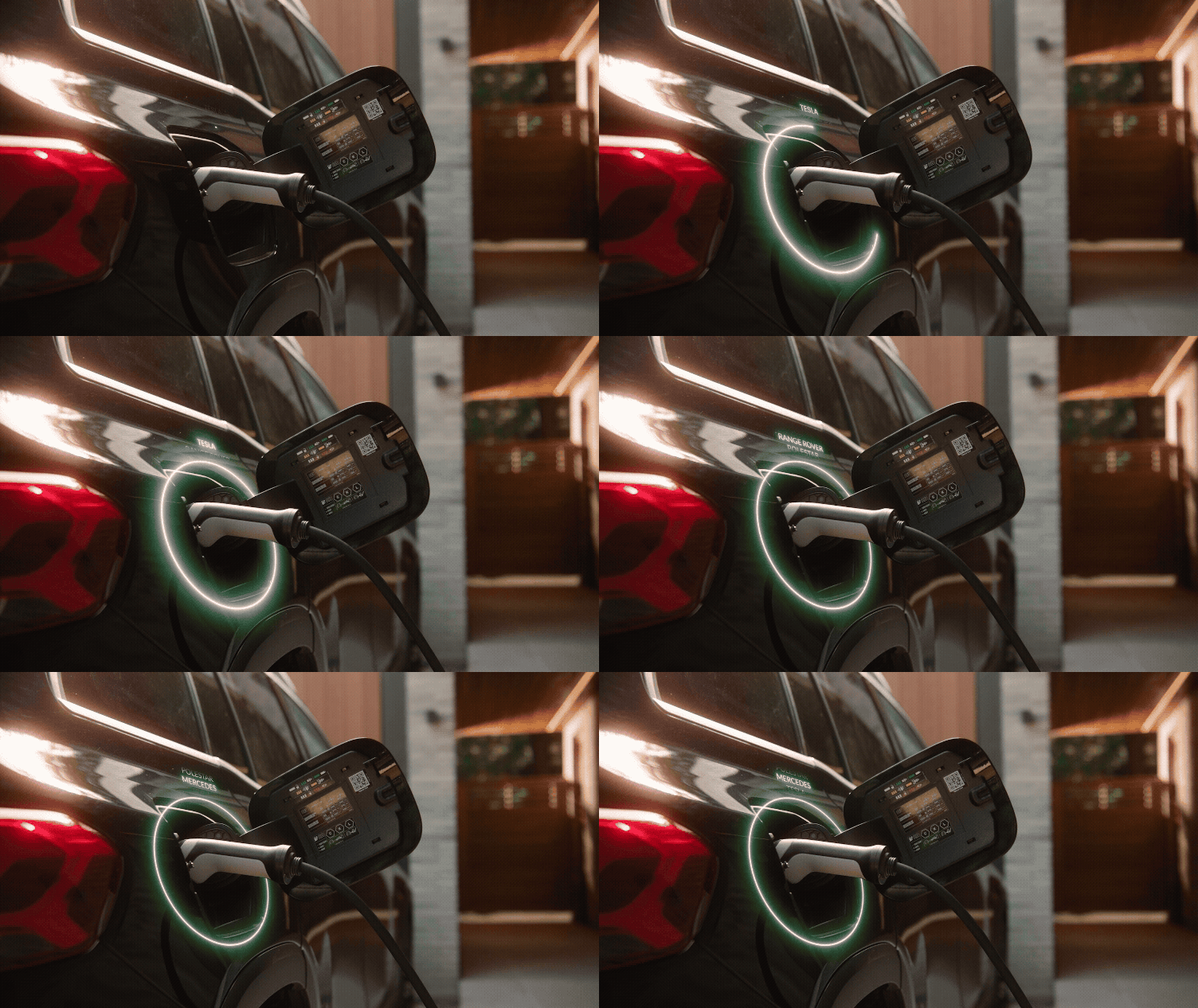
PLC-enabled chargers like the Humax MX7 solve this problem by identifying the vehicle directly. On connection of the power line, each EV presents a unique identifier during the “handshake”, and the charger verifies this against an approved list of vehicle IDs before accepting the connection.
Security and Control for Homeowners
PLC-based identification gives homeowners a new level of control over how and when their charger is used. With any vehicle able to be uniquely identified by the smart charger in their driveway, security is simple: if the car’s ID isn’t on the list, charging never starts. Set up is as simple as connecting your vehicles once and approving them – then in future, your charger will recognise them as soon as they’re plugged in.
It’s ideal for anyone with a publicly accessible or shared driveway or parking space, ensuring you don’t have to worry about energy theft when you’re away from home. And on the occasions you want to provide power to a guest or neighbour’s EV, you can easily set timed access so the charger will supply their vehicle for a limited period, or on a recurring schedule during specific hours.
Flexible Fleet Charging at Home
It’s not only homeowners who benefit – reliable vehicle ID enables domestic charging of fleet EVs. With more drivers working from home, it makes sense to use domestic chargers to get vehicles ready for the next shift rather than making a lengthy detour to wait at a depot charge point. But tracking kWh and cost data – and differentiating this from personal use – has long been a roadblock.
Now, chargers with PLC-based identification make it simple to tag charging sessions to specific fleet vehicles, even at the driver’s home address. Firms can accurately track reimbursement down to the penny, and specify off-peak charging schedules to save money, implement charging limits per shift, or add exceptions for emergency charging.
For the driver, this creates a true plug-and-play experience. There’s no RFID tag to scan or app to unlock, just attach the cable and the charger will recognise the fleet vehicle and activate the appropriate charging schedule. Since billing is digital, employees no longer have to remember a fuel card or keep receipts, and they don’t have to deal with monthly expense reports. That gives them more time to focus on their duties, and makes them feel trusted rather than policed by their employer.
Smart Identification Today, V2G Tomorrow
Whether you’re a homeowner or fleet manager, choosing a PLC-enabled charging solution unlocks both immediate and future benefits. You get access to the security and reporting benefits that come with reliable vehicle identification today, and future-proof capability as more V2G-enabled electric vehicles come online. That includes new models entering the market and over-the-air software updates that make existing vehicles V2G-ready.
If you’re looking for a PLC-enabled charging solution with V2G readiness built in as standard, speak to Humax today to learn more.